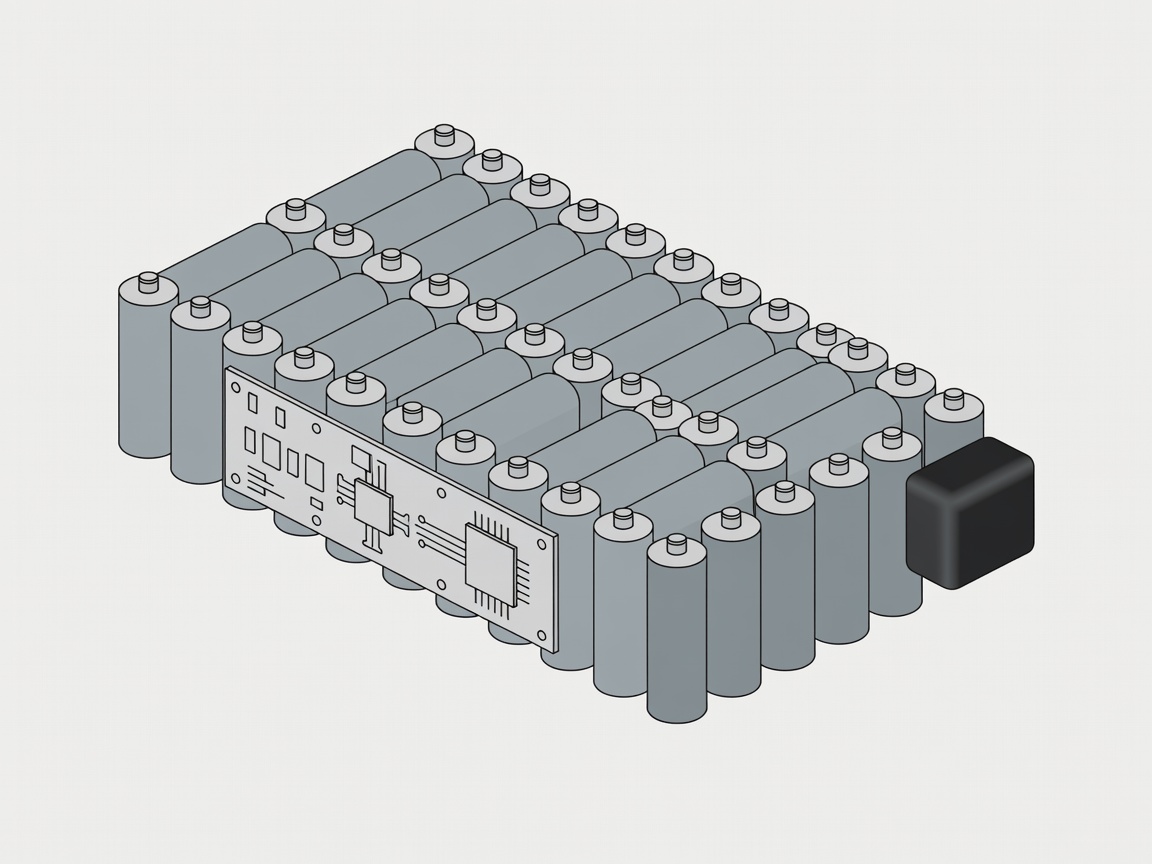
Batteries and operating conditions
Read range claims in context
A runtime figure is a measurement under specific conditions. Understanding what sits behind it lets you plan sessions realistically and compare boards fairly.
Capacity (Wh)
Stored energy. Voltage × amp-hours. The honest base for comparison.
Chemistry
Usually lithium-ion NMC for energy density; LiFePO4 trades density for cycle life.
BMS
Battery management system balancing cells and cutting out on faults.
Cycle life
Charge cycles before capacity falls to a stated level, often 80%.
| Factor | Effect on runtime | What you can do |
|---|---|---|
| Rider plus gear weight | Heavier riders need more power to plane or foil | Compare claims stated for your weight band |
| Average speed | Drag rises steeply with speed | Use eco modes for longer sessions |
| Water state and wind | Chop and headwind add drag and corrections | Plan on reduced runtime in rough water |
| Temperature | Cold cells deliver less usable energy | Keep the pack warm before launch |
| Battery age | Capacity declines with cycles and time | Track runtime over seasons |
Watt-hours, not minutes
The most useful battery number is capacity in watt-hours. It is the product of nominal voltage and amp-hour rating, and it expresses how much energy is stored. Minutes of riding are a consequence of that energy and the average power you draw. If one board holds roughly twice the watt-hours of another, it stores roughly twice the energy, whatever the marketing says about runtime.
Manufacturers usually publish runtimes measured in favourable conditions: flat water, a moderate rider weight, an economical riding mode. Those figures are useful for comparing models tested the same way. They are not a forecast for a windy afternoon with a heavier rider and frequent full-throttle bursts.
Why the same pack lasts differently
Power demand rises sharply with speed because hydrodynamic drag grows faster than speed itself. Doubling cruising speed can far more than double the power required. Every start costs energy as well: a jetboard must push its hull onto the plane and an eFoil must accelerate until the wing generates enough lift. A learning rider who falls often can use a significant share of a pack on take-offs alone.
Propulsion type matters too. Because a foiling hull leaves the water, eFoils typically cover more distance per watt-hour than jetboards once they are up. That is why foiling boards often advertise longer runtimes with similar battery sizes, and why comparing raw minutes across the two categories misleads.
Chemistry and cell format
Most electric board packs use lithium-ion cells with nickel-manganese-cobalt (NMC) cathodes, prized for high energy density. Lithium iron phosphate (LiFePO4) cells are heavier for the same energy but tolerate more charge cycles and are considered more thermally stable. Cells come in cylindrical, prismatic or pouch formats; cylindrical cells such as the 18650 and 21700 sizes are common because they are widely produced and well characterised.
The battery management system
A battery management system monitors cell voltages and temperatures, balances cells during charging and disconnects the pack when limits are exceeded. It is the reason a board may reduce power as the pack approaches empty or overheats. Good battery documentation should mention relevant safety testing, such as IEC 62133 for rechargeable cells and UN 38.3 for transport.
Charging, storage and transport
Use only the manufacturer's charger, on a non-flammable surface, away from direct sun and not unattended for long periods. For storage beyond a few weeks, makers commonly recommend a partial charge rather than full or empty, in a cool and dry place. Full charge plus heat accelerates ageing.
Transport needs planning. Under IATA dangerous goods rules, lithium-ion batteries above 160 Wh are not permitted in passenger baggage, and board packs are typically well above that. Travelling riders usually ship packs as dangerous goods by ground or sea, or rent on arrival. Check with carriers before you book.
Questions to ask before buying
- What is the capacity in watt-hours, and at what rider weight and mode was runtime measured?
- How long does a full charge take with the standard charger?
- Is the pack swappable, and what does a spare cost?
- What capacity retention does the warranty guarantee, and for how many cycles?
- What safety and transport testing does the battery carry?
The battery's environment is the board itself. Continue with what the shell must withstand.